Autonomía digital y tecnológica

Código e ideas para una internet distribuida

Linkoteca. Steve Jobs


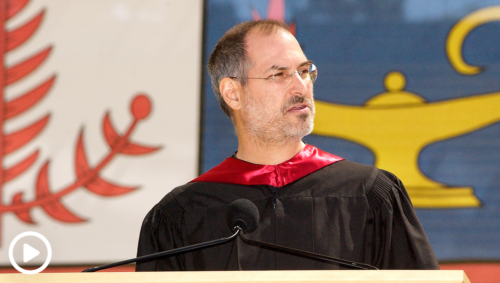
Steve Jobs durante su discurso de graduación de la promoción de 2005 de Stanford.

This is a prepared text of the Commencement Address delivered by Steve Jobs, CEO of Apple Computer and of Pixar Animation Studios, on June 12, 2005.

Reed College at that time offered perhaps the best calligraphy instruction in the country. Throughout the campus, every poster, every label on every drawer, was beautifully hand-calligraphed. Because I had dropped out, and didn’t have to take the normal classes, I decided to take a calligraphy class to learn how to do this. I learned about serif and sans-serif typefaces, about varying the amount of space between different letter combinations, about what makes great typography great. It was beautiful, historical, artistically subtle, in a way that science can’t capture. And I found it fascinating.

None of this had even a hope of any practical application in my life. But ten years later, when we were designing the first Macintosh computer, it all came back to me. And we designed it all into the Mac. It was the first computer with beautiful typography. If I had never dropped in on that single course in college, the Mac would have never had multiple typefaces or proportionally spaced fonts. And since Windows just copied the Mac, it’s likely that no personal computer would have them.

Pocos asistentes

Una de las reglas que Steve Jobs puso en marcha en Apple para acabar con las reuniones improductivas es convocar a pocos asistentes. El número ideal está entre tres y cinco personas, los imprescindibles para tratar los temas que marcan el orden del día sin caer en la divagación o perder tiempo escuchando a todo el equipo, lo que a veces se traduce en repetir las mismas ideas varias veces a lo largo de la reunión.

Pocos temas en cada reunión

Otra de las claves del fundador de Apple para reducir el número de reuniones improductivas es acortar el número de temas recogidos en el orden del día a un máximo de tres. En opinión del emprendedor, esta técnica consigue aumentar los niveles de concentración de los asistentes, así como extraer mejores conclusiones del encuentro.

Un máximo de media hora

La última regla de Steve Jobs para terminar con las reuniones improductivas es fijar un tiempo máximo. Así, las reuniones en Apple no duraban más de 30 minutos durante su etapa como CEO. Esta medida responde a un hecho científico. A partir de ese periodo de tiempo, la concentración humana deja de funcionar de la misma manera, y las reuniones comienzan a aprovecharse mucho menos.

NeXT (later NeXT Computer and NeXT Software) was an American computer and software company founded in 1985 by Apple Computer co-founder Steve Jobs.

NeXT introduced the first NeXT Computer in 1988, and the smaller NeXTstation in 1990. The NeXT computers experienced relatively limited sales, with estimates of about 50,000 units shipped in total. Nevertheless, their innovative object-oriented NeXTSTEP operating system and development environment were highly influential.

NeXT also developed WebObjects, one of the first enterprise Web application frameworks. WebObjects never became very popular because of its initial high price of $50,000, but it remains a prominent early example of a Web server based on dynamic page generation rather than on static content.